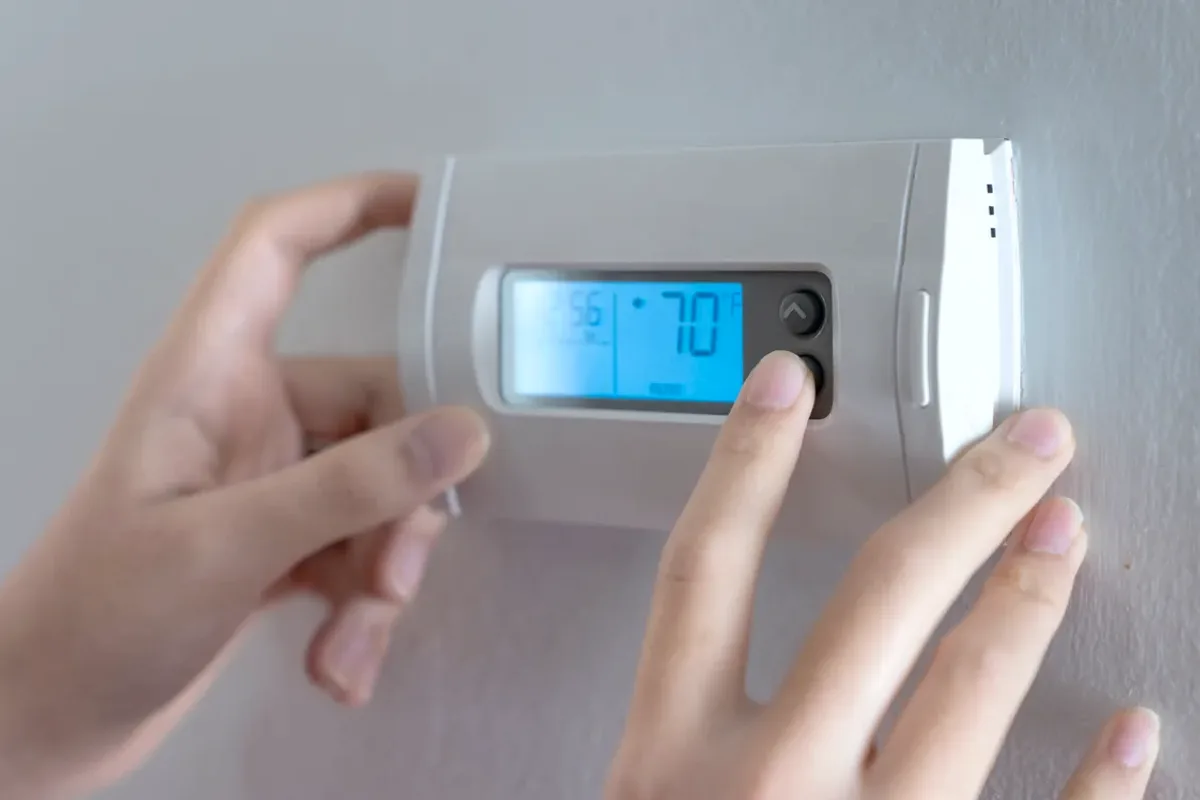
Request thermostat repair & replacement for a property in Stratford. Include the equipment, the problem or planned work, and your location so the request can be reviewed.
What should be checked when a thermostat display is blank or the system cycles unexpectedly?
Thermostat problems can originate in the thermostat, its power supply, its wiring, or the heating and cooling equipment it controls. A blank display, inaccurate reading, short cycling, or lost smart connectivity points toward different checks. Repair may be suitable for a connection or configuration fault, while replacement requires confirming compatibility with the HVAC system, including its stages and wiring. The existing setup and the homeowner’s desired scheduling or remote-control features help define the right scope.
Note the thermostat model, displayed messages, affected heating or cooling modes, and any recent wiring or equipment changes. A service assessment can verify power, transformer output, wiring, temperature sensing, and the equipment call for heat or cooling. Smart models also require checking network and software conditions. These findings distinguish a repairable connection or setup issue from a compatibility reason to replace the control.
Thermostat power, transformer output, wiring, sensing, and system calls.
Smart thermostat network connection, software, and scheduling.
Repair or replacement based on HVAC staging and control compatibility.
Assessment and Scope
Questions for the Proposed Work
01
Trace power and control calls
A blank display can involve the thermostat, its power source, wiring, or transformer, while unexpected cycling may involve sensing, configuration, or the HVAC system’s response. Checking the control call end to end helps avoid replacing a thermostat when the fault lies elsewhere. Voltage measurements and internal electrical checks are service tasks; the homeowner can report symptoms and model information without opening equipment or handling wiring.
02
Check smart features separately from HVAC operation
A smart thermostat that loses network connection may still control the equipment locally, so remote access and heating or cooling operation should be assessed separately. Network settings, software status, and the thermostat’s schedule can help explain a connectivity complaint. Before replacement, confirm that the desired smart features work with the existing system and that the proposed control supports its wiring and operating stages.
03
Choose repair or replacement by compatibility
A repair may be appropriate when inspection finds a correctable connection, sensing, or configuration problem. Replacement makes more sense to consider when the control is failing, required parts are unavailable, or a homeowner wants scheduling or remote features not supported by the existing model. Check the HVAC system’s control requirements before choosing a new thermostat, since compatibility and configuration affect how it operates.
Compare the next step
Explain the user access needs and proposed control position, then ask whether that location represents the controlled space. Compare supported remote sensors or interfaces where direct relocation is unsuitable. Keep the device usable without placing it where sunlight, a heat source, or unusual air movement distorts its purpose. Ask the user to review the proposed interface for readable information and practical operation. Compare local buttons, supported remote functions, and sensor options with the equipment and the actual access need.
Thermostat wiring is not universal. Do not connect wires by colour alone or work on energized wiring; a compatible control must be configured for the equipment it serves.