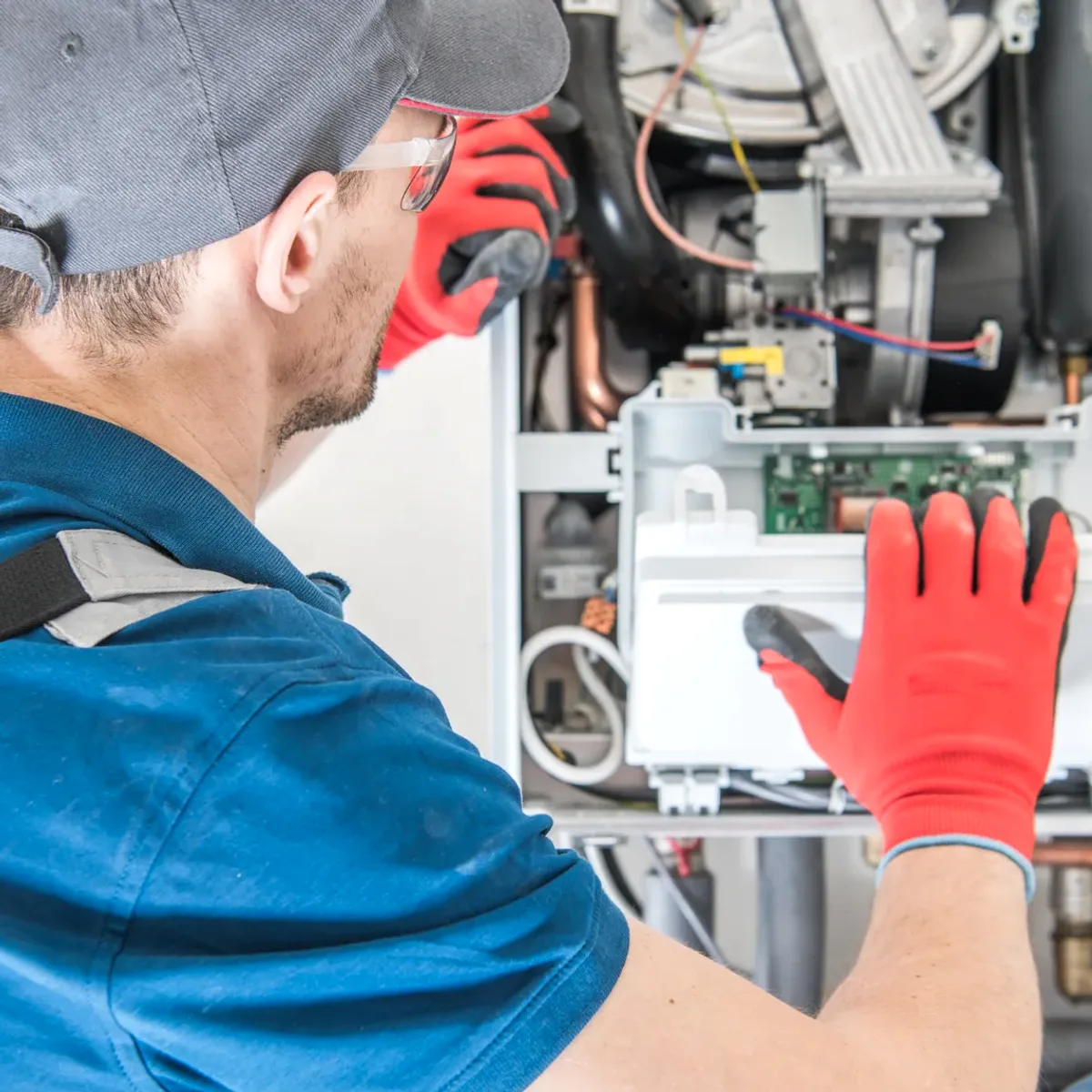
Request boiler service for a property in Stratford. Include the equipment, the problem or planned work, and your location so the request can be reviewed.
How do fuel type and hydronic system design affect boiler diagnosis?
Boiler service depends on fuel, boiler design, and the hydronic distribution system. A natural-draft cast-iron oil boiler serving radiators differs from a condensing gas or propane boiler connected to in-floor loops, including its venting and operating requirements. No-heat symptoms, leaks, or falling pressure can arise from an igniter, circulator, relief valve, or expansion tank, among other causes. Inspection and service records help distinguish a repair from maintenance or replacement planning.
Record the boiler fuel and model if known, the affected radiators or floor loops, visible leakage, pressure changes, and any fault indication. An assessment should distinguish ignition or burner faults from circulator, expansion, or pressure-related problems and consider the boiler’s venting design. This matters because a natural-draft oil unit and a condensing gas or propane boiler require different checks and replacement planning.
Gas, propane, and oil boiler faults involving ignition, circulation, leaks, and pressure.
Natural-draft cast-iron and condensing boiler replacement with radiator or in-floor compatibility.
Inspection-based boiler maintenance, venting checks, and hydronic flushing decisions.
Assessment and Scope
Questions for the Proposed Work
01
Separate ignition, circulation, and pressure faults
A boiler that does not fire may involve an igniter or burner control, while cold radiators or in-floor loops can point toward circulation or distribution concerns. Falling pressure and a dripping relief valve require investigation of the system rather than repeated pressure adjustment. A circulator, expansion tank, leak, or other component may be involved; fuel, combustion, electrical, and pressure-control work should be left to qualified service.
02
Match replacement to the boiler and distribution
Replacement planning should compare the existing boiler’s condition and fuel with the hydronic system it serves. A natural-draft cast-iron oil boiler and a condensing gas or propane boiler differ in venting, controls, and operating requirements. Radiators and in-floor loops also affect compatibility and design. Confirming these details helps establish whether conversion or changes to venting, piping, or controls belong in the installation scope.
03
Base maintenance on instructions and inspection
Boiler maintenance should follow the manufacturer’s instructions and the condition found during inspection, including checks relevant to the fuel, burner, venting, and hydronic components. A flush is not automatically required; system condition and manufacturer guidance should determine whether water-side cleaning is appropriate. Maintenance can document corrosion, leakage, or worn parts, but a confirmed fault still needs a repair decision rather than being treated as routine service.
Compare the next step
Show the route to the boiler and the location of pumps, valves, and other service points. Ask which clearances and access must remain under the equipment instructions before adding storage or enclosing the mechanical space. The proposal should explain how routine maintenance and future repairs can be performed in the finished layout.
Leave fuel, combustion, electrical, and pressure-system work to a qualified contractor. Do not adjust safety devices or repeatedly add water to a system with an unexplained leak or pressure loss.